How the UK Became One of the Most Cashless Countries in the World
If you have spent the last few weeks wondering whether to visit a currency exchange before your UK trip, the short answer is: probably not. The longer answer takes a little more context, and it is worth understanding before you land. The United Kingdom has undergone a quiet but fundamental shift in how people pay for things, and for international visitors arriving in 2025 and 2026, that shift changes almost everything about the experience of getting around.
In 2014, cash accounted for nearly half of all payments made in the UK, at 48%. By 2024, according to UK Finance, that figure had fallen to just 9%. The £100 per transaction contactless limit on physical cards, with no ceiling on mobile payments through Apple Pay or Google Pay, means that most everyday purchases, from a flat white in a station cafe to a restaurant dinner for four, clear without a PIN. More than half of all UK adults now use mobile contactless payments at least once a month. That threshold was crossed for the first time in 2024, and it reflects a country that has not merely adopted contactless technology but built daily life around it.
Cash is not disappearing from the UK, but it has become the exception rather than the rule. For most international visitors, a contactless card or smartphone is all that is needed from arrival to departure.
What Contactless Means for Visitors
What the Contactless Infrastructure Actually Looks Like on the Ground
Statistics confirm the trend. What matters to a visitor stepping off a long-haul flight is whether the system actually works in practice. It does, and in ways that are worth knowing before arrival.
The contactless limit for physical debit and credit cards stands at £100 per transaction. For payments made via Apple Pay or Google Pay on a phone or watch, there is no fixed cap applied at the national level, though individual banks may set their own thresholds. Visa, Mastercard, and American Express are accepted throughout the UK, across retailers of all sizes. Most international cards work on TfL transport with no registration required. One point worth checking with your bank before travel: some overseas-issued cards attract a foreign transaction fee on each payment, which can add up across a multi-day stay. A travel-focused card from a provider such as Wise or Revolut avoids this entirely.
"The UK contactless infrastructure is not a convenience upgrade. It is the primary payment system. Visitors who treat it as a backup tend to find they never need anything else."Umbrella Transfers Editorial
One practical note for visitors used to other countries: many London businesses, particularly cafes, fast food outlets, and transport services, no longer accept cash at all. This is not universally the case, but it is common enough that arriving without a working contactless card is a genuine inconvenience.
Transport Payments
Getting Around London Without Touching a Ticket Machine or Cash
Transport for London introduced contactless payments on buses in 2012 and on the Underground in 2014. The intervening decade has made the system one of the most refined in the world. Understanding three practical rules covers virtually every journey a visitor will make.
Buses and Trams: Tap Once
Cash is not accepted on any TfL bus or tram. Tap your card or phone when boarding. The flat bus fare is £1.75 regardless of distance, and free bus-to-bus transfers apply for one hour after the first tap. No tapping out required.
Tube, DLR, Overground, Elizabeth Line: Tap In and Out
Always use the same card or device for both tap in and tap out. Switching between your physical card and your phone resets the fare cap, which means paying more than necessary. The daily cap for Zones 1 to 2 is £8.90 as of 2026, and fares are frozen until at least March 2027.
Daily and Weekly Caps: Built In Automatically
Once daily fares reach the cap, all further TfL travel on that card is free until 4.30am the next morning. The weekly cap (Monday to Sunday) is £44.70 for Zones 1 to 2. No action is required. The system calculates it automatically.
Many international visitors arrive and go straight to an Oyster card machine out of habit. For most short-stay visitors with a standard contactless card, this is unnecessary. Contactless gives identical fares and capping to Oyster, with no upfront card fee of £10 and no need to manage a separate balance. The only genuine reason to prefer Oyster is if a particular card does not register correctly on the TfL system, or if the visitor wants to track spending on a dedicated travel account.
Everyday Spending
Where Contactless Works, and the Small Handful of Situations Where Cash Helps
The practical picture for everyday spending in the UK is straightforward. Supermarkets, restaurants, pubs, cafes, pharmacies, museums, theatre box offices, market stalls in most city locations, street food vendors, hotel bars, and petrol stations all accept contactless. The 2024 UK Finance data shows that 62% of all card payments were made contactlessly, and that figure has continued to rise into 2025. For a visitor spending a week in London or another major UK city, the chance of needing cash at any mainstream point of sale is genuinely small.
| Situation | Contactless Accepted? | Notes for Visitors |
|---|---|---|
| Supermarkets and convenience stores | Yes, universally | All major chains and most independent shops accept contactless. Self-service tills prompt for contactless by default. |
| Restaurants and cafes | Yes, almost universally | Rare exceptions exist at very small, family-run establishments. Card readers are standard at the table or counter. |
| Pubs | Yes, with rare exceptions | Traditional rural pubs occasionally remain cash-preferred. City and town centre pubs are overwhelmingly contactless. |
| London transport (TfL) | Yes, cash not accepted | Buses do not accept cash under any circumstances. All TfL services use contactless or Oyster only. |
| London black cabs | Yes, mandatory since 2016 | All licensed London taxis are legally required to accept contactless. No cash-only drivers at London ranks. |
| City and town market stalls | Usually yes | The majority of market traders now carry portable card readers. Some individual stalls in rural or antique markets may still prefer cash. |
| Car parks | Often yes, not always | Council-run and older car parks sometimes use coin-operated machines. Most modern car parks accept contactless or app payment. |
| Small churches, heritage honesty boxes | Rarely | Donation points at smaller historic sites often rely on cash. A handful of coins covers this for an entire trip. |
Carrying £20 to £30 in sterling covers virtually every cash-only situation a visitor is likely to encounter across an entire stay. Carrying more than this is rarely necessary and introduces the minor risk of an unnecessary trip to a currency exchange.
Ground Transport
The One Transport Decision Where Payment Planning Still Matters
For most spending during a UK visit, the contactless infrastructure is comprehensive enough that payment is simply not a question worth thinking about. Ground transport from airports is the exception. Not because it requires cash, but because the method of booking determines exactly how much payment uncertainty exists, and for a tired traveller arriving after a long flight, certainty is worth planning for.
London black cabs are required by law to accept contactless and have been since 2016. That is a firm position. The complication lies elsewhere. Rank taxis outside major airports carry a small surcharge added to the metered fare. More significantly, a metered fare is not a fixed fare. Traffic between Heathrow and central London varies significantly by time of day and day of the week. A journey that costs £60 at 7am on a Tuesday can cost considerably more during peak congestion. For visitors comparing options at the kerbside after a long-haul arrival, that uncertainty is avoidable.
Pre-booked private hire transfers settle payment at the time of booking, online, before departure. No card presented to a driver. No fare negotiated at the terminal. No question about what the final amount will be. The price confirmed when booking is the price charged. London airport transfers from Umbrella Transfers operate on this model across all five London commercial airports, with flight monitoring included so the driver adjusts to actual landing time rather than scheduled arrival.
Payment confirmed online before travel. Fixed price regardless of traffic. Driver monitors the flight in real time and adjusts pickup to actual landing. Meet and greet in the arrivals hall. No cash, no card presented on arrival, no variable metered fare.
For visitors who want the UK contactless experience extended to the airport pickup itself, this is the version that removes every remaining variable. Umbrella Transfers offers this service from Heathrow, Gatwick, Stansted, Luton, and London City Airport.
Payment is in-app and cashless by design. Pricing is dynamic: fares rise during busy periods, bad weather, and peak travel times. The driver does not monitor the flight independently, so a delay can require rebooking from inside the terminal.
A practical option for short or spontaneous journeys where a fixed price is less important than immediate availability.
Contactless accepted by law. Metered fare with a small airport rank surcharge. No booking needed. The driver does not know your flight details in advance, so long queues at peak times and metered fares during congestion are the trade-offs for the convenience of just arriving and going.
Fixed price from every London airport. Flight tracked. Driver waiting in arrivals. Payment confirmed before you board.
Book Your TransferWhat to Watch For
Payment Red Flags Visitors Should Know Before They Arrive
The UK contactless infrastructure is reliable, but a few situations catch visitors off guard. Most of them are easily avoided with a little advance knowledge. The goal is not to create anxiety about payment, but to remove it.
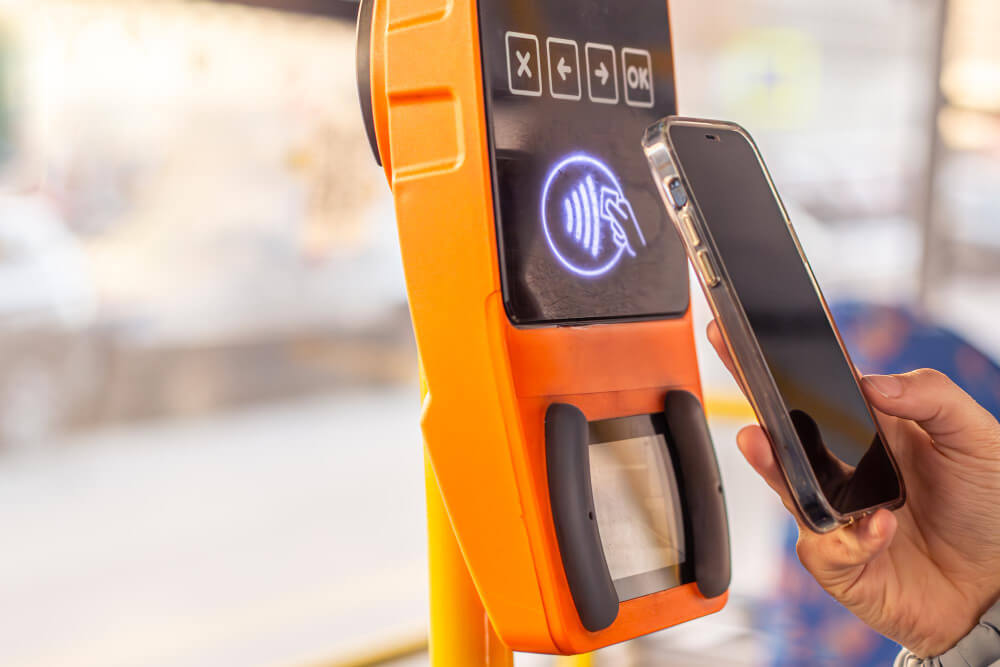
The most common payment problem for visitors in the UK is not a shortage of cash. It is an unexpected card block because the bank was not told about foreign travel. Solve that before departure and most other friction disappears.
Guidance by Journey Type
Choosing the Right Approach by How and Where You Are Travelling
The right payment and transport strategy depends on the shape of the visit. Different journeys call for different decisions, and what works for a solo business traveller arriving at London City Airport is not necessarily the same approach that suits a family landing at Heathrow with four suitcases.
First-time visitors to London
Use contactless on all TfL services. No Oyster card needed for a short stay unless your bank card does not register on the system. Carry £20 in cash for edge cases. Pre-book the airport transfer so payment is already settled and a named driver is waiting in arrivals.
Business travellers
A pre-booked business transfer from the airport provides a receipt for expenses and eliminates the variable metered fare. Contactless covers everything else across the working day, from client lunches to black cabs between meetings.
Families travelling with children
Children under 11 travel free on all TfL services when accompanied by a paying adult. Children aged 11 to 15 require an Oyster card for discounted fares. For the airport leg, a pre-booked private transfer with luggage assistance removes the complexity of navigating public transport with multiple bags and young children.
Visitors exploring beyond London
Contactless pay-as-you-go now covers National Rail services within Greater London and many services in the South East. For longer intercity journeys, train tickets are purchased by card online or at the station. Rural destinations may have more cash-reliant local businesses, so carry a slightly larger float: £40 to £50 covers most eventualities.
Visitors arriving at regional airports
Umbrella Transfers also covers Manchester and Birmingham airports. Pre-booking from a regional hub follows the same model: fixed price, flight monitoring, and payment settled before travel, regardless of which UK airport you land at.
Visitors from countries where cash is still dominant
The UK contactless infrastructure works with most internationally-issued Visa and Mastercard products. If your home card does not carry the contactless symbol, a prepaid Wise or Revolut card loaded in GBP before departure functions identically to a UK debit card on all payment terminals and TfL services.
Final Thoughts
What the Contactless Shift Really Means for How You Plan a UK Visit
The question of whether to carry cash in the UK has a clear answer now, and it was not this clear five years ago. Cash is not obsolete, and it is not unwelcome. But the infrastructure has moved so decisively toward contactless that a visitor who arrives with a working card and a charged phone is genuinely equipped for the vast majority of what a UK trip involves. The currency exchange queue at the airport, the search for a cash machine on a Sunday morning, the awkward moment at a restaurant when only one person at the table has notes: these are steadily becoming less relevant experiences.
What remains is a single decision worth making before departure rather than on arrival: ground transport from the airport. Not because it requires cash, but because it is the one moment where an unplanned approach introduces the most variables. A metered fare in traffic, a surge-priced ride-hailing app at a busy terminal, an unofficial driver in arrivals: all of these are avoidable. A pre-booked transfer with a fixed price, a named driver in the arrivals hall, and payment already confirmed is simply the version of the UK contactless experience that starts from the moment the plane lands rather than the moment you reach the hotel.
The chauffeur services and airport transfer bookings at Umbrella Transfers operate across all five London commercial airports and beyond. Fixed pricing, meet and greet in arrivals, live flight monitoring, and free waiting time from actual landing. Payment is confirmed before departure. Nothing to sort out at the terminal.
Notify your bank of UK travel before departure. Use contactless on all TfL services and choose one card or device for capping to apply correctly. Carry £20 to £30 in sterling for edge cases. Pre-book airport ground transport so payment is settled and a named driver is waiting when you land. Everything else takes care of itself.
Fixed-price airport transfers
Arrive in the UK with one less thing to think about
Pre-booked transfers from all London airports. Fixed price, meet and greet, flight monitoring, and free waiting time included as standard.
Book Your Transfer