The First Journey Is Not the Time to Improvise
Most new parents spend months preparing the nursery, choosing a pram, and reading everything they can find about the early weeks. The journey home from hospital or from the airport often gets far less attention. It is the one part of the whole experience that happens in the outside world, in a moving vehicle, with a baby who has never been in a car before.
That first journey is short in distance and long in significance. Getting it right is not complicated. It does require a few decisions to be made in advance, and those decisions are much easier to make before the birth than in the hours after it. This guide covers everything a new or expecting parent needs to know about that journey: which seat to choose, how to think about the vehicle, what the law actually says, and how a pre-booked private transfer removes the variables that cause the most stress.
The decisions that make the first journey calm are all made beforehand. Book the right vehicle, confirm the car seat, feed and change the baby before you leave. On the day itself, there is very little left to do.
Legal Guidance
What UK Law Actually Requires for Newborns in Vehicles
Children must use an appropriate child restraint in a vehicle until they are 12 years old or 135 centimetres tall, whichever comes first. For newborns, this means a rear-facing infant carrier or i-Size infant seat from the very first journey. There are no exceptions in private cars. A newborn cannot travel in any private vehicle without a correctly fitted, appropriate car seat.
The law is slightly different for licensed taxis and private hire vehicles. Under UK legislation, if a driver does not provide a child seat, children over three years old may use an adult seat belt in the rear, and children under three may technically travel without restraint in a licensed taxi or minicab. This legal exemption exists because taxis operate on-demand and cannot always carry every seat type. However, it is an exception that safety organisations including RoSPA strongly advise against using for newborns. The correct approach when booking any transfer with a very young baby is to confirm that an appropriate infant seat will be fitted before the vehicle arrives, or to supply your own.
The key practical distinction: the law sets a minimum. A responsible transfer provider sets a higher standard, and confirming the car seat arrangement at the point of booking is the single most important question a new parent can ask.
"The law establishes a minimum. The decision about your newborn's first journey deserves a higher standard than the minimum."Umbrella Transfers Editorial
Car Seat Guidance
Choosing the Right Infant Seat for the Journey Home
There are two parallel certification systems currently valid in the UK. Both are legal. Understanding which applies to the seat you are buying, or requesting from a transfer provider, removes a significant source of confusion.
ECE R129 (i-Size)
The newer European standard, height-based, and required to be used rear-facing until at least 15 months. Look for the label with a circled capital E and R129. Requires ISOFIX connectors in the vehicle.
ECE R44/04 (Weight-Based)
The older standard, still valid in the UK and still sold here. Seats carry an orange label. Group 0+ covers newborns from birth to approximately 13kg. These seats also require rear-facing positioning for newborns.
The Two-Hour Guideline
UK safe sleep guidance, supported by the Lullaby Trust and NHS, advises that newborns should not be in a car seat for more than two hours continuously. For babies under four weeks, many experts suggest shorter stretches of around 30 minutes where the journey allows.
Airbag Rule
A rear-facing infant seat must never be placed in the front passenger seat if there is an active airbag. Always place a newborn's seat in the rear of the vehicle. This applies to every vehicle type.
Carrycot Option
For premature babies or those with medical conditions who need to travel flat, a crash-tested carrycot approved for car use is an alternative to a standard infant seat. A regular pushchair carrycot is not suitable and must never be used in a car unless specifically approved for it.
Fitting and Installation
A correctly fitted seat is as important as the seat itself. If using a transfer provider's seat, confirm that it will be fitted before the vehicle arrives. Never attempt to re-install a seat you are unfamiliar with in the vehicle while the baby is already with you.
Transport Comparison
How the Main Transport Options Compare for Newborn Journeys
The right choice for the first journey home depends on distance, group size, luggage, and how much certainty the new parents need. The comparison below reflects the realistic experience of each option with a newborn, not the headline journey time.
| Option | Car Seat Certainty | Luggage Space | Door-to-Door | Pram Friendly | Flight / Delay Cover | Privacy | Pre-bookable | Fixed Price |
|---|---|---|---|---|---|---|---|---|
1 Pre-booked private transfer |
✓ | ✓ | ✓ | ✓ | ✓ | ✓ | ✓ | ✓ |
2 Own car (family or partner) |
✓ | ✓ | ✓ | ✓ | ✗ | ✓ | ✓ | ✓ |
3 Walk-up taxi or minicab |
✗ | ✓ | ✗ | ✓ | ✗ | ✗ | ||
4 Train or Tube |
✗ | ✗ | ✗ | ✗ | ✗ | ✓ | ||
5 Rideshare app (no seat pre-booked) |
✗ | ✓ | ✗ | ✓ | ✗ |
Public transport is not suited to the first journey home with a newborn. Crowded carriages, steps, platform gaps, and the absence of any private space for feeding or settling a distressed baby make trains and the Tube genuinely unsuitable for this specific journey. A walk-up taxi introduces uncertainty at exactly the moment certainty matters most. Neither the seat nor the vehicle size can be confirmed in advance.
Choosing the Right Provider
What to Look For When Booking a Transfer for a Newborn
A good transfer provider for a newborn journey is not the one with the lowest price or the most impressive vehicle photos. It is the one that can confirm specific arrangements in advance and communicate clearly if anything changes. These are the points that matter, in order of importance.
The car seat question is not a detail to mention on the day. It should be confirmed as part of the booking process, with the specific seat type and age suitability noted. A provider who cannot confirm this in advance is not the right provider for this journey.
If you are bringing your own seat, confirm that the vehicle is ISOFIX compatible and that the driver is familiar with assisting parents to install it. Many parents find this reassurance is worth more than any other feature.
The first journey home with a newborn often involves more equipment than expected. A hospital bag, a travel system or pushchair, and any additional luggage from family members who have come to help can quickly exceed the boot space of a standard saloon. An MPV or people carrier, booked in advance, removes this problem entirely.
If grandparents or other family members are travelling with you from the airport or hospital, confirm the total headcount at the time of booking. A vehicle sized for two adults and a baby is not the same as one needed for two adults, two grandparents, and a full set of luggage.
For parents arriving at a London airport or leaving a UK hospital, Umbrella Transfers covers both scenarios with the features that matter most for newborn journeys. Child seats are available on request at the point of booking, subject to availability and confirmed in advance. The vehicle fleet includes spacious MPVs and people carriers with the boot space to accommodate a travel system and family luggage without compromise. The airport transfer service includes meet and greet as standard, meaning the driver waits in the arrivals hall with a name board, so new parents are not navigating the terminal alone with a newborn and luggage.
Flight monitoring means pickup time adjusts automatically if the flight is delayed, which is particularly important when a new mother has been travelling long-haul and the journey home needs to happen without any additional waiting around. Fixed pricing means the cost is known before the journey starts, with no surge pricing and no surprises. The 24/7 real-person support line means any last-minute questions on the day of travel have a straightforward answer.
Arriving at a UK airport with a newborn is a very different experience from arriving as a couple. A meet and greet service, where the driver waits in the arrivals hall holding a name board, removes the need to navigate pick-up zones, call a driver on a mobile, or stand in a queue with a car seat and a pram. It is a small feature that makes a significant difference to a parent who is exhausted and focused entirely on the baby.
All of the major London airports served by Umbrella Transfers include meet and greet as standard, covering Heathrow, Gatwick, Stansted, Luton, London City, and regional airports including Farnborough and Biggin Hill.
Pre-booked family transfers with meet and greet, flight monitoring, and the space your new arrival needs.
Book Your TransferPractical Preparation
Preparing for the Journey: What to Confirm and What to Carry
Most of the preparation for the first journey home happens in the days before, not on the day itself. A parent who has confirmed the vehicle, the seat, and the route in advance arrives at the pick-up point with one fewer thing to think about. These are the preparation steps that consistently make the biggest difference.
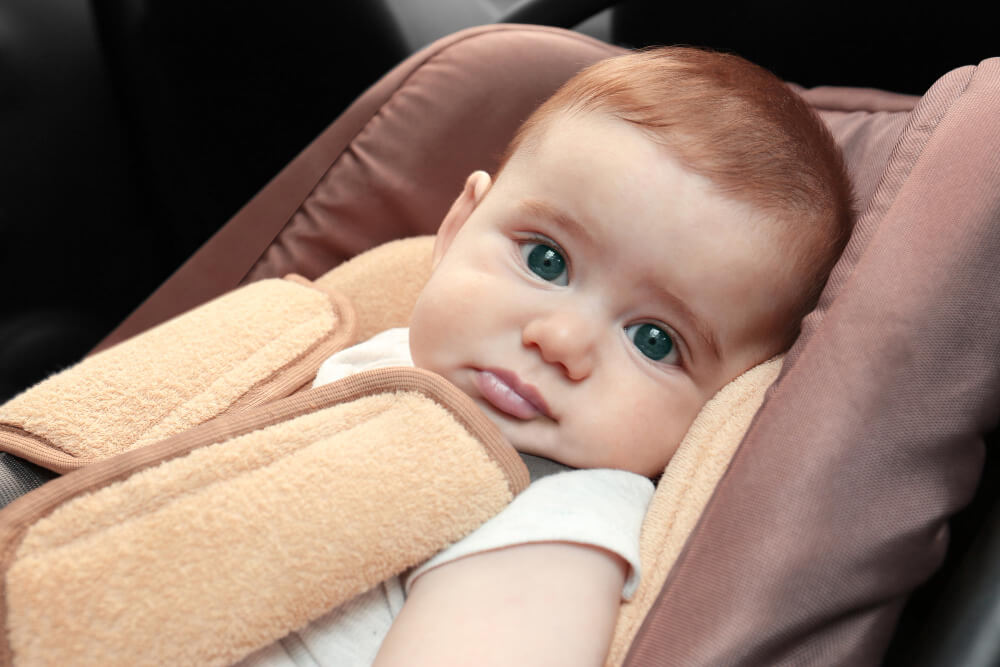
The most reliable signal of a good family transfer provider is the ability to confirm specific arrangements in writing before the booking is complete. Vague assurances about "usually having seats available" are not confirmation.
Practical Guidance
Choosing the Right Transfer by Journey Type
The first journey home with a newborn takes different forms depending on whether the family is leaving a hospital or arriving from a flight. The practical requirements differ. Here is how to approach each scenario.
Hospital Discharge: UK Birth
The hospital discharge journey is usually short in distance, often to a home within the same city or county. The most important variable is timing: discharge can be confirmed only a few hours in advance. Book a transfer with 24/7 support so a vehicle can be arranged at short notice, and confirm the car seat in advance rather than waiting until discharge day. If the birth was by caesarean, request a vehicle with easy entry and a higher seating position. An MPV is often more comfortable than a saloon for a post-operative mother.
Airport Arrival: Baby Born Abroad
For families arriving in the UK after a birth overseas, the airport arrival is the first journey home. Pre-book a Heathrow transfer, Gatwick transfer, or whichever airport applies, with meet and greet confirmed. The driver will wait in the arrivals hall regardless of delays. Choose a provider with flight monitoring so pickup adjusts automatically if the flight is late. Confirm luggage capacity for a travel system plus international luggage volumes, which are typically larger than domestic equivalents.
Travelling with Grandparents
When grandparents or other family members are accompanying the new parents, the vehicle requirement changes. A standard four-seat saloon is insufficient for two adults, one or two grandparents, a newborn, and the associated equipment. Book a people carrier or an eight-seat MPV, available through the Umbrella Transfers fleet, and confirm the group size at the time of booking. The same car seat considerations apply regardless of group size.
Long-Distance Transfer
Some families face a genuinely long transfer after airport arrival or hospital discharge, perhaps returning to a home several hours from London. Where the journey will approach or exceed two hours, plan a stop. The driver should be briefed on the route and aware that a break will be needed. Book a long-distance private transfer rather than relying on a local minicab for a route the provider may not regularly cover. Fixed pricing makes the cost predictable regardless of distance.
Premature or Medically Complex Babies
Premature babies or those with respiratory conditions may have specific transport requirements. A standard infant carrier is not always appropriate. Speak to the neonatal team before discharge about specific seat requirements, which may include a lie-flat approved carrycot. The transfer provider should be informed of any additional requirements at the time of booking so the correct vehicle and seating arrangement can be confirmed in advance.
Return Airport Transfer (Flying With a Newborn)
For families planning to fly with a baby in the early months, the outbound transfer to the airport requires the same planning as the inbound journey home. Confirm the child seat, book an appropriately sized vehicle, and allow significantly more time at the airport than a pre-baby journey would require. Family lanes at security are available at most major UK airports, including Heathrow and Gatwick, but passing through immigration and customs with a newborn and a full set of baby equipment takes longer than the departure board suggests.
Final Thoughts
The First Journey Sets the Tone. Make It Easy.
There is a version of the first journey home with a newborn that involves a frantic call to a minicab company, a seat that may or may not arrive, a boot that is not quite big enough, and a set of parents who are already exhausted before the car has left the hospital car park. None of that is necessary. It happens when transport logistics are treated as something to sort out later.
The alternative is straightforward. Book a private transfer before the birth or before the flight lands. Confirm the infant seat in writing. Choose a vehicle that fits the group and the equipment. Brief the driver on the route. Feed and change the baby before you leave. The journey itself then becomes what it should be: quiet, direct, and calm. The baby does not know it is their first car journey. The parents do not need to make it feel like one.
For families arriving at a UK airport, or leaving a hospital anywhere in the country, Umbrella Transfers offers the combination of features that matter most for this specific journey: meet and greet at arrival, a fleet that includes spacious people carriers, child seats on request, flight monitoring with automatic pickup adjustment, fixed pricing, and a 24/7 support team. Book through the Umbrella Transfers booking page or via the app, and leave the logistics sorted before the most important day of the year.
Book a private transfer before the birth or the flight, not after. Confirm the infant seat specifically and in writing. Choose a vehicle that fits the full group. Feed and change the baby before departure. Keep the journey direct and, where possible, short.
Fixed-price family transfers
Bring your newborn home without the guesswork
Meet and greet included, flight monitoring as standard, child seats on request, and a fleet with space for everything your new arrival needs.
Book Your Transfer